By Steph Guthrie

As spring finally arrives on campus, Trinity College is planting seeds that will last for generations, thanks to donors like Rina Greer. Her gift of a tree to the Lawson Centre for Sustainability site via Trinity’s Viridis Project will stand as a living memory of her late husband William N. Greer ’47, longtime volunteer and prominent architect.
“Trees are living, breathing things that respond to their environment,” Rina observes. For her, this evoked Bill’s architectural approach and its emphasis on the influence of the built environment, honed under early tutelage from American designer and systems theorist Buckminster Fuller. “I always saw Bill as being very pragmatic in what he does, but very sensitive to all the concerns that would influence a decision.”
Bill was primarily renowned for his contributions to architectural heritage and historical preservation. He served for 15 years as chief architect of the Historical Preservation Division of the Toronto Historical Board beginning in 1976, when the Heritage Act had just come into effect. In this role and his later work as a consultant, his achievements ranged from establishing Wychwood Park as Toronto’s first residential heritage conservation district to producing heritage assessments, conservation plans and more for iconic landmarks like Queen’s Park, Union Station, and the Ontario Science Centre.
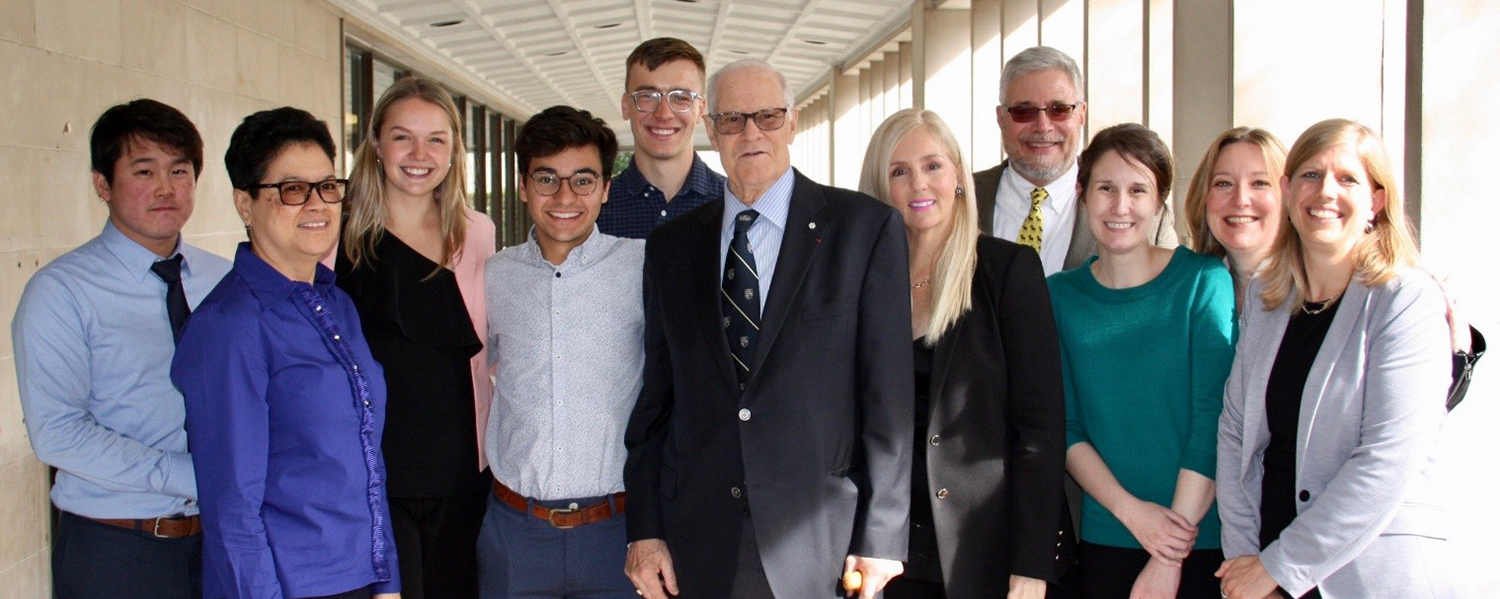
Amidst these monumental achievements, Bill always found time to volunteer with Trinity College. “He participated at every level,” remembers Rina, from serving as 4T7 year rep to a lengthy stint on Trinity College Corporation to profile assessment of prospective students. Perhaps most impactfully, Bill acted as a volunteer consultant on virtually every building project at Trinity College since his graduation.
Bill advised on new builds like the Gerald Larkin Building in 1961, as well as on the renovation and refurbishment of existing buildings. This included the Trinity College Chapel’s restoration and the installation of the elevator leading to the new Trinity College Archives. He also served as a jury member for the Trinity College Quad redesign and most recently, the selection of Dutch architectural firm Mecanoo to design the Lawson Centre for Sustainability, opening this fall.
Rina sees this final project as exemplifying Bill’s architectural ethos. While Bill’s public recognition tended to centre upon his heritage work, Rina emphasizes that Bill “was brought up with and nurtured on the modern and contemporary vernacular.” He was always driven to find ways to leverage architectural elements to marry the old with the new. “His skill was in making both shine,” Rina says.
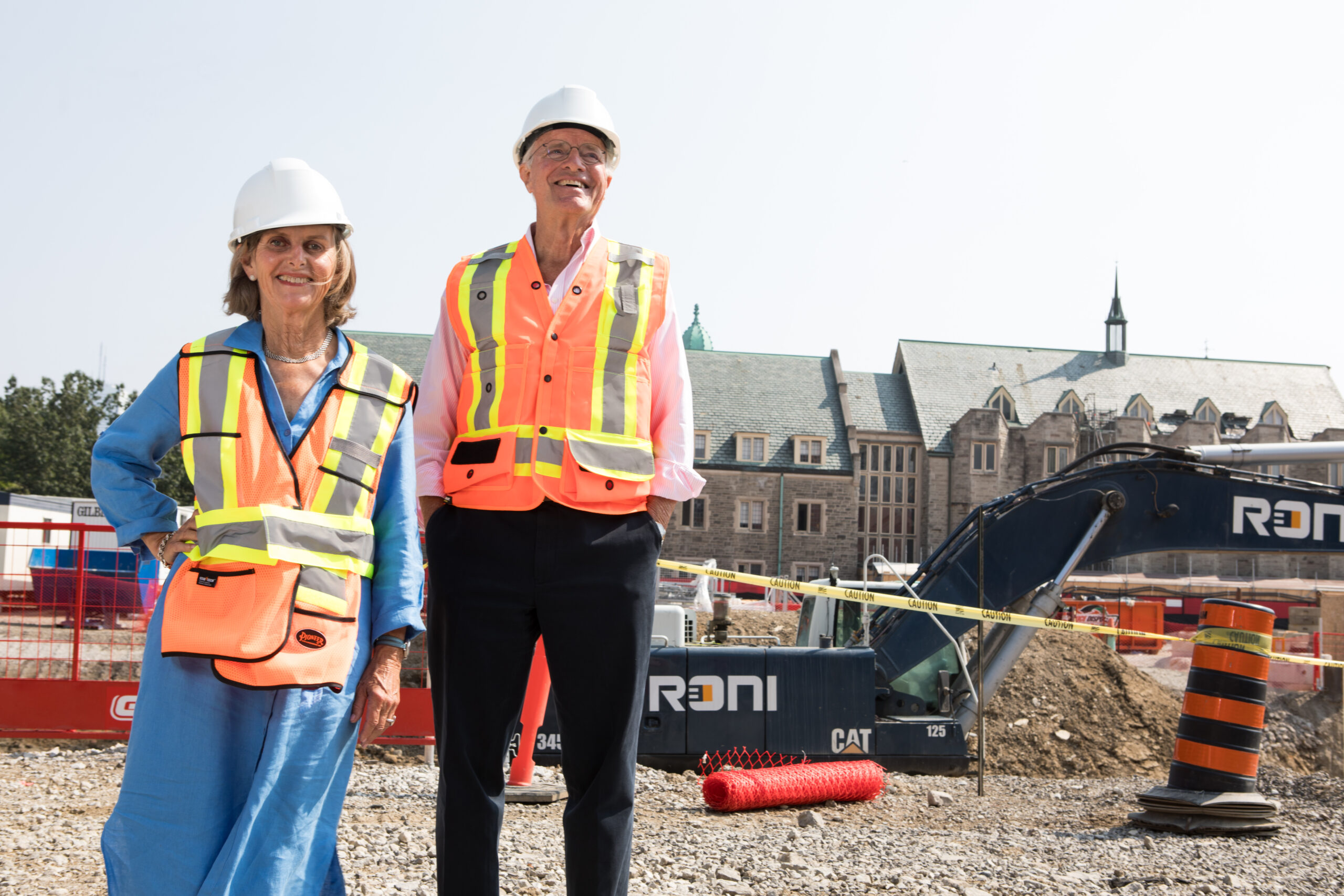
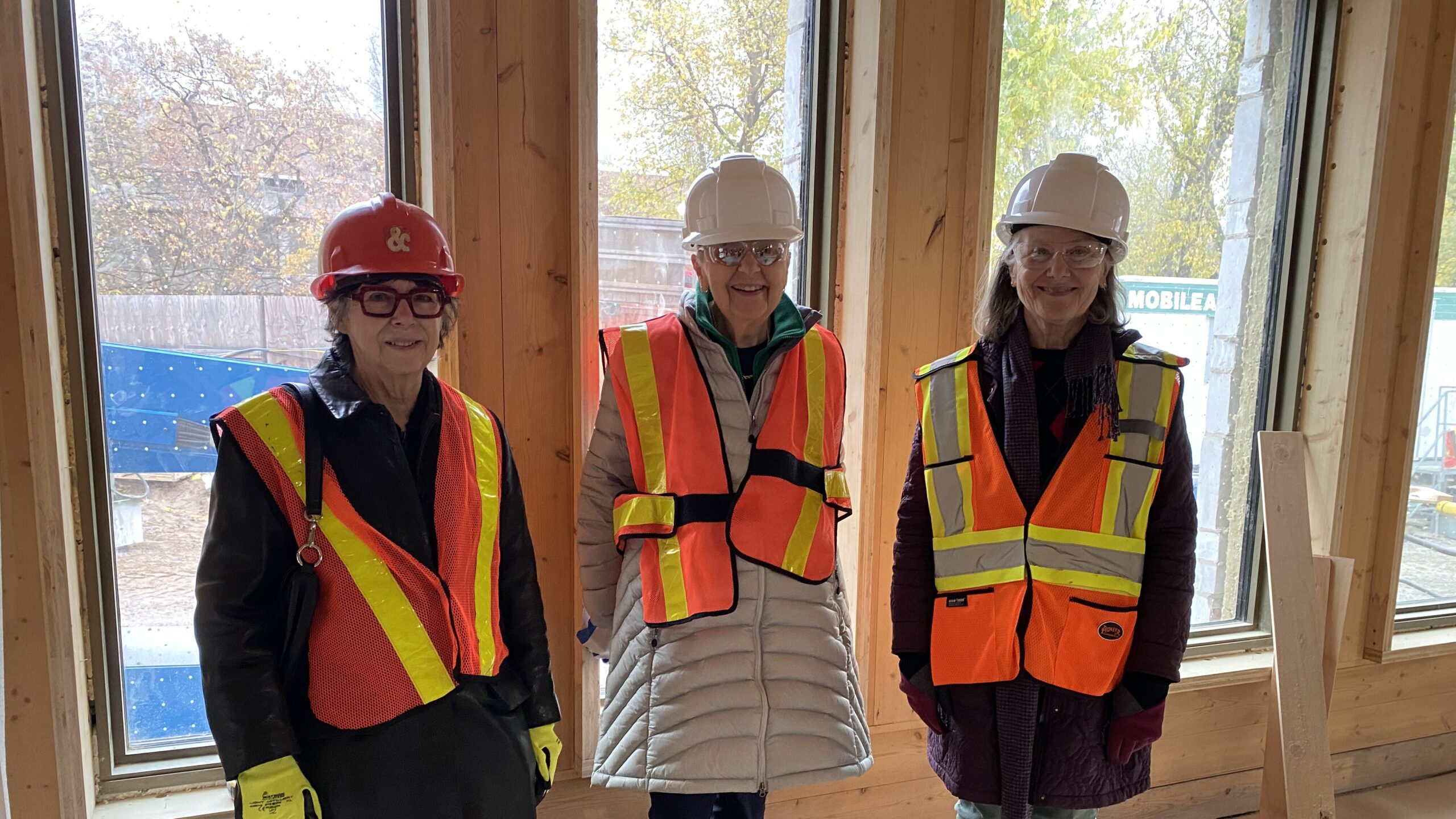
This is part of why Bill felt so strongly that the Lawson Centre for Sustainability should not be a high-rise — a perspective shared by the project’s lead architect, Mecanoo’s Francine Houben. Not only does the four-storey design blend more naturally with the existing Trinity College buildings, but a shorter height encourages use of the stairs, in service of the modern vision for sustainability and wellness that animates the College. “They did a phenomenal job,” Rina says of Mecanoo’s work on the project, which she had the opportunity to glimpse up close on construction site tours in 2024 and 2025.
Rina felt it was a natural choice to mark Bill’s extraordinary life with a gift that will have an indelible physical presence on Trinity College campus. “It was home for him,” she says. “He got a superb education and made lifelong friends there,” Rina remarks. While she notes that these takeaways are “not so unusual for Trinity,” Bill’s involvement with Trinity’s physical spaces over the years nurtured a deeper tie to the institution. As Rina puts it, Trinity “was his touchstone.”
Bill lives on in many ways — not just in this tree, but in archives of his work. His preservation papers are now now housed at the City of Toronto Archives, and his personal and academic papers are carefully stewarded in Trinity College’s own Archives.
When asked what advice Bill might have for a current Trinity College student, Rina says he would want them to “always be curious and broad in their approach to learning. Be a generalist, at least in the beginning. Experience it all and be open to everything the College has to offer.”
If you’d like to honour the memory of a loved one with ties to Trinity, consider naming a tree or bench at the Lawson Centre for Sustainability via the Viridis Project. Options start at $1,500.