
“Teaching students how to engage in healthy debate is crucial for the future of public discourse. Leaders in all disciplines must learn to discuss and engage with diverse and opposing perspectives to ensure robust engagement and develop viable solutions to the challenges we face as citizens and fellow human beings”
Professor Michael Kessler, Raymond Pryke Chair and Director, Margaret MacMillan Trinity One Program.
The Open Minds Project will provide programming around the themes of disagreement, polarization, and mutual understanding. As universities are increasingly under pressure from various social forces, Trinity is well poised to meet this important moment by setting expectations for all students around how we approach controversial questions in university.
At the centre of The Open Minds Project is the Witt Visitorship – an annual distinguished lecture series hosted in the Winter term. We will invite a prominent individual to participate in a number of scholarly events in the Trinity One program and the broader Trinity College intellectual community. In addition, the speaker will deliver a public lecture.
To maximize the impact of the Witt Visitorship on our campus we have developed wraparound programming involving all all students at Trinity College and registered in Trinity hosted academic programs. In 2026-27 we are piloting a new course called “Why is this Controversial?” (TRN299/399). Students enrolled in this course will serve as Open Minds Research Ambassadors, developing a research topic on questions related to academic freedom, civil discourse, and contemporary legal and social issues.
The year will conclude with an International Conference on Polarization in the Academy, where we will be joined by distinguished scholars to engage with our student researchers and alumni community.
Upcoming Events
- September – Orientation Week events
- September – April – Why Is This Controversial Course
- September – April – Ambassador-led pop-up & scheduled student events at Trinity
- February 9-11, 2027 – Witt Visitorship
- May – research conference at Trinity
Trinity College Open Minds Research Ambassadors

Gabrielle Bridi
Senior Research Assistant
Gabrielle Bridi is a fourth-year student studying a double major in Ethics, Society, and Law and Human Geography.
Her research interests lie at the intersection of law, human rights, ethics, and decolonisation. She is currently pursuing an independent study that examines the mechanisms which shape the differential visibility and contestability of torture across detention sites. Focusing on Abu Ghraib and Saydnaya, her project examines how torture becomes legible, documentable, and actionable under different evidentiary and political conditions. As the Open Minds Senior Research Assistant, she looks forward to supporting event programming and ambassadors’ research projects.

Joya Minson
Research Assistant
Joya Minson is a third-year student studying Psychology with a double minor in Economics and Applied Data Science.
Her research interests include social and developmental psychology, particularly in how people learn to communicate, form beliefs, and engage with perspectives different from their own. She is especially interested in identifying effective ways to teach and encourage productive disagreement, with the goal of helping individuals engage with controversial ideas more openly, respectfully, and constructively. As an Open Minds Research Assistant, she looks forward to exploring how educational institutions can create environments that fosters more meaningful dialogue across differing perspectives.
2026 – 2027 Ambassador Team

Brian Daniel
Brian Daniel is a third-year student pursuing a major in Ethics, Society, & Law, and a double minor in Political Science and Religion.
His research examines the free speech and civil discourse policies of a targeted sample of post-secondary institutions in Canada and the United States that have experienced speech-related violence or serious conflict on campus, identifying recurring language patterns, ambiguities, and enforcement gaps. The goal of his project is to surface concrete, provocative recommendations for policy reform that better sustain open, civil dialogue without simply suppressing controversial viewpoints — engaging directly with the “speech paradox,” the tension where protecting all speech can itself silence certain voices.
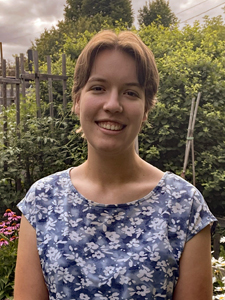
Maria Goemans
Maria Goemans is a third-year undergraduate student at Trinity College double majoring in Cell & Molecular Biology and Environmental Science and minoring in Indigenous Studies.
Maria’s proposed research will examine the controversy surrounding oil pipeline expansion in Western Canada. She plans to analyze the interplay of intra- and international political pressures which are leading to the resistance or endorsement of oil pipeline development. She aims to address academic, political, and community concerns related to financial stability, environmental justice, and Indigenous peoples’ jurisdiction and health as these issues intersect in oil pipeline expansion.

Kylie Lin
Kylie Lin is a third-year student majoring in Ethics, Society, & Law and minoring in Applied Data Science and Human Geography.
Her research examines why local resistance to affordable housing is controversial and how that controversy shapes its expression. She will explore how social and moral norms encourage neighbourhood residents to reframe personal concerns about proposed affordable housing developments as more publicly legitimate arguments. By examining which forms of reasoning are validated or dismissed in public debates, she will investigate which societal standards influence community discourse.

Nia Sudhakar
Nia Sudhakar is a second-year student double majoring in Ethics, Society, and Law and Canadian Studies, with a minor in Political Science.
Her proposed research question is “How does national politics impact professors’ framing of controversial topics and what effect does that have on political diversity & conversation among students?” This study explores how professors present controversial political issues in the classroom, including what they emphasize, avoid, or frame as acceptable debate. It also examines how these choices shape students’ willingness to express differing views—especially from classroom norms—and the overall political diversity in class.

Isabel Tallevi
Isabel Tallevi is a second-year student at the University of Toronto, pursuing a specialist in psychology, a major in neuroscience, and a minor in environmental biology.
Her research interests include misinformation, science communication, and belief formation. Within the Open Minds Project, she plans to research whether psychological-inoculation training (interventions that expose people to weakened forms of misleading arguments to build resistance to misinformation) can reduce emotionally driven responses to false, inflammatory information and promote constructive, evidence-focused civil discourse. She is also interested in identifying effective models of implementation for these interventions in academic environments.

Will Norwood
Will Norwood is a second-year, international student at the University of Toronto, studying criminology and philosophy.
His research interests include how public perceptions of “moral” immigration tactics and narratives are contingent on the visibility of women and children in the media. His research will include an extensive review of the treatment of unaccompanied minors in immigration systems and how children are subject to treatment violating basic principles of Human Rights.