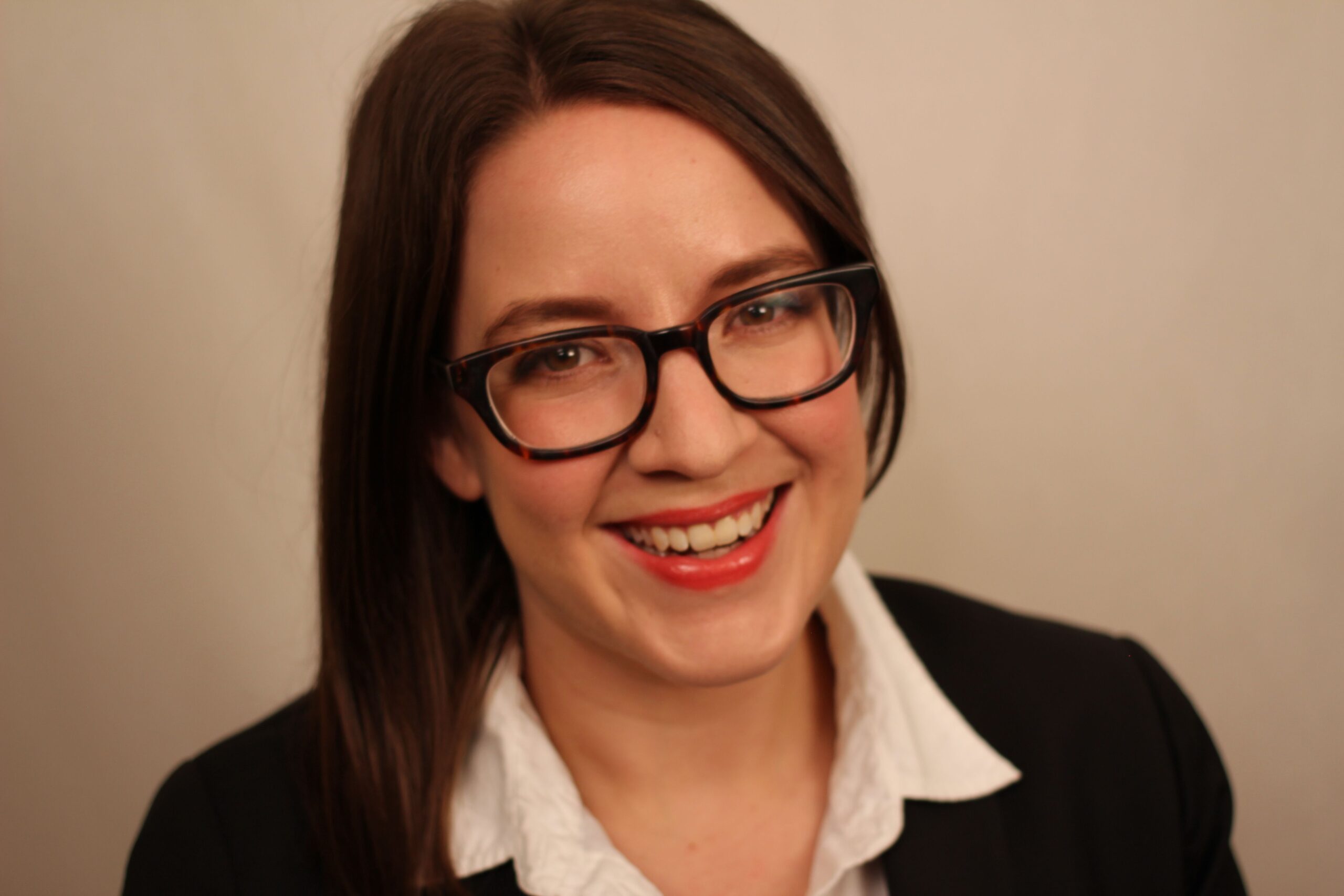
As Trinity’s new Rolph-Bell Archivist, Lindsay Grant is already uncovering fresh ways to connect the College’s past with its present. From surprising analog treasures to new approaches in digital access, she brings an infectious enthusiasm for the stories and materials that shape Trinity’s identity. We asked her about what inspires her work—and what’s capturing her curiosity in the Archives right now.

TRINITY: What drew you to archival work in the first place — and what keeps you inspired in it?
LINDSAY: Years ago, I was working at a television production company, and someone put me in charge of the footage and tape library. I became so interested in the whole process of describing visual resources, organizing information, and helping people find what they were looking for. Around the same time, I was also working with libraries and archives to find historical photos and footage for television productions. I had always really liked history, and here were folks who got to work with the history record every day. I thought “I might like to do that!” This led me back to university, and to getting a Master of Information degree at the Faculty of Information at the University of Toronto, with the goal of working in archives.
I’m inspired by so many aspects of the job! Every archival collection is unique, because every single person is unique, and this means I get to learn or discover something new with every new collection I work on. I’ve also found I like working with students and sharing my archival know-how with them, particularly when it comes to helping them find archival resources, and using Discover Archives, the university’s central online central portal, to explore archival collections across campus. I’m also really inspired by the possibilities that come from doing archival research and telling stories that connect Trinity’s students, staff, and alumni with the past. Every exhibit, presentation, and newsletter is a chance to link the Trinity community with its history and maybe get a better understanding of its present.
TRINITY: The Trinity Archives holds not just documents but also the College’s art collection. What’s something about the Archives that tends to surprise people?
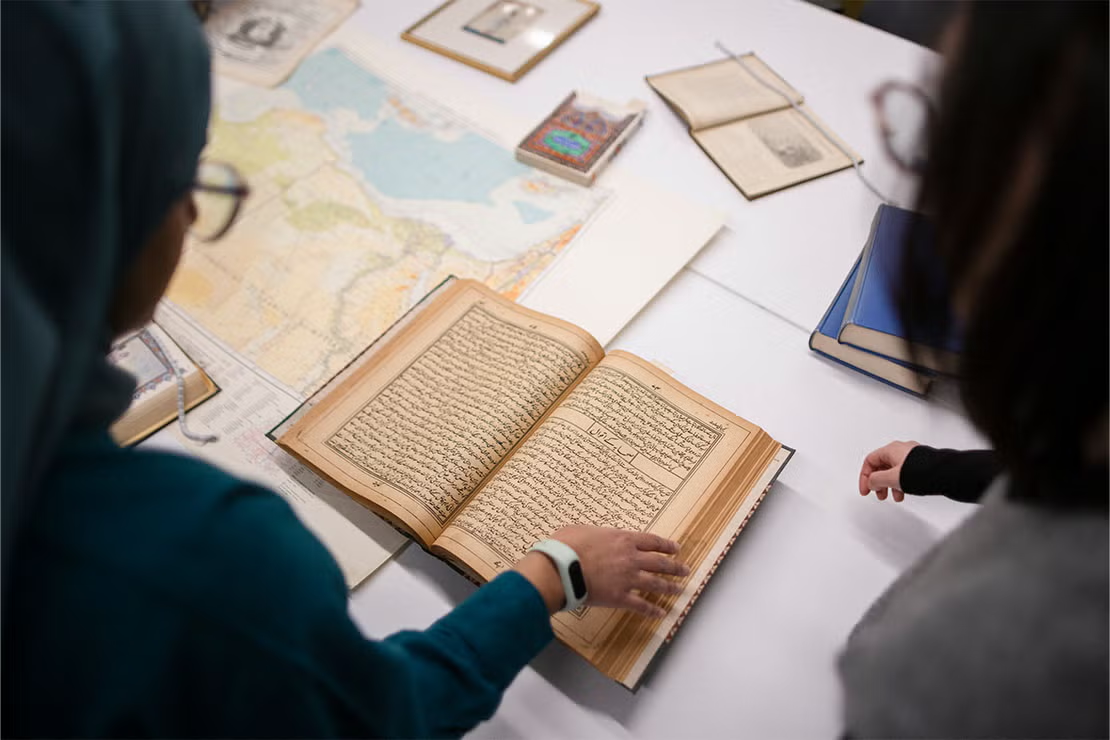
LINDSAY: I think a lot of people are surprised to find that the Archives are very analog! There’s an assumption out there that everything has been digitized and can be found online. But for a variety of reasons, most archival materials haven’t been digitized, and therefore most archival research takes place in person, in the reading room. This can be really intimidating at first — especially for those who are early on in their research careers, who might not know how we organize information in archives (it’s a lot different than in libraries). But it can also be really rewarding, because you have a chance to discover something unique, that few other people have seen.
TRINITY: Digital access is changing how people discover archives. How do you balance traditional research methods with new technologies for access and preservation?
LINDSAY: This is a great question! I think digital access is often a great bridge into the archives for beginner and casual users. It can be a very effective way for people to engage with things in our collections like student publications, or government documents — discrete items that can be understood and used without needing to know the full context of an archival collection. I’d love to digitize the older copies of the Trinity University Review, because they’re such a rich source of history, and could be hours of browsing fun! Digital access is also a great way for people to be able to view and access archival materials that might be a little bit more fragile. Last year, for example, I digitized a collection of glass lantern slides from the Samuel A.B. Mercer fonds. These slides are delicate and can be tricky to handle, and it’s also hard to see details on the slide without a good light source. High-resolution digital access copies solve both problems — you can look without touching and zoom in to see minute details. Finally, digital access can also be a powerful tool for creating thematic exhibits of archival materials on a specific subject or topic – but it’s essential to indicate the fonds or collection each item belongs to, to make it clear that the selected documents represent only a portion of a larger archival whole, especially if people want to do further research on that topic. Ultimately, I think it’s about sign-posting digital access copies effectively, so that people know where these materials come from and where they can go to learn more, if they want to.
TRINITY: For many alumni, the Trinity Archives is where their own stories live — in photos, yearbooks, and records. How can alumni connect with or contribute to the Trinity Archives today?
LINDSAY: Come for a visit! I’m generally here Monday to Friday during regular business hours, and I love it when alumni drop in to chat, ask questions, and see what we have in our collections. With a little notice, I’m also happy to arrange Archives tours and more extensive consultations. Finally, the Archives depends on alumni contributions to document the richness of college life outside the classroom and office. I gladly accept things like yearbooks, student publications, photos, blazers, diaries, scrapbooks and other materials relating to student life at Trinity College over the years.
TRINITY: What kinds of projects or collaborations are happening right now in the Archives that you find especially exciting? What’s on the horizon?
LINDSAY: One of our priorities for the future is exploring options to expand the Archives’ storage vault. When we opened in 2017, we had capacity for 2,900 linear feet of materials, and we’re now approaching that limit. Much of this growth is thanks to the work of my predecessor, Sylvia Lassam, whose efforts brought in significant collections related to Canadian history, diplomacy, and international relations in support of the College’s academic programs. I’m excited about creating additional space for these kinds of collections and about collaborating with faculty to integrate these archival resources into teaching — through assignments, classroom activities, and other innovative approaches!
Bonus question: Outside of work, what helps you unwind—books, music, films, or something unexpected?
LINDSAY: I love going on walks. I also really like gardening, reading, running, and cycling. And I think this might be the winter that I finally get myself some cross-country skis.
Published December 2025