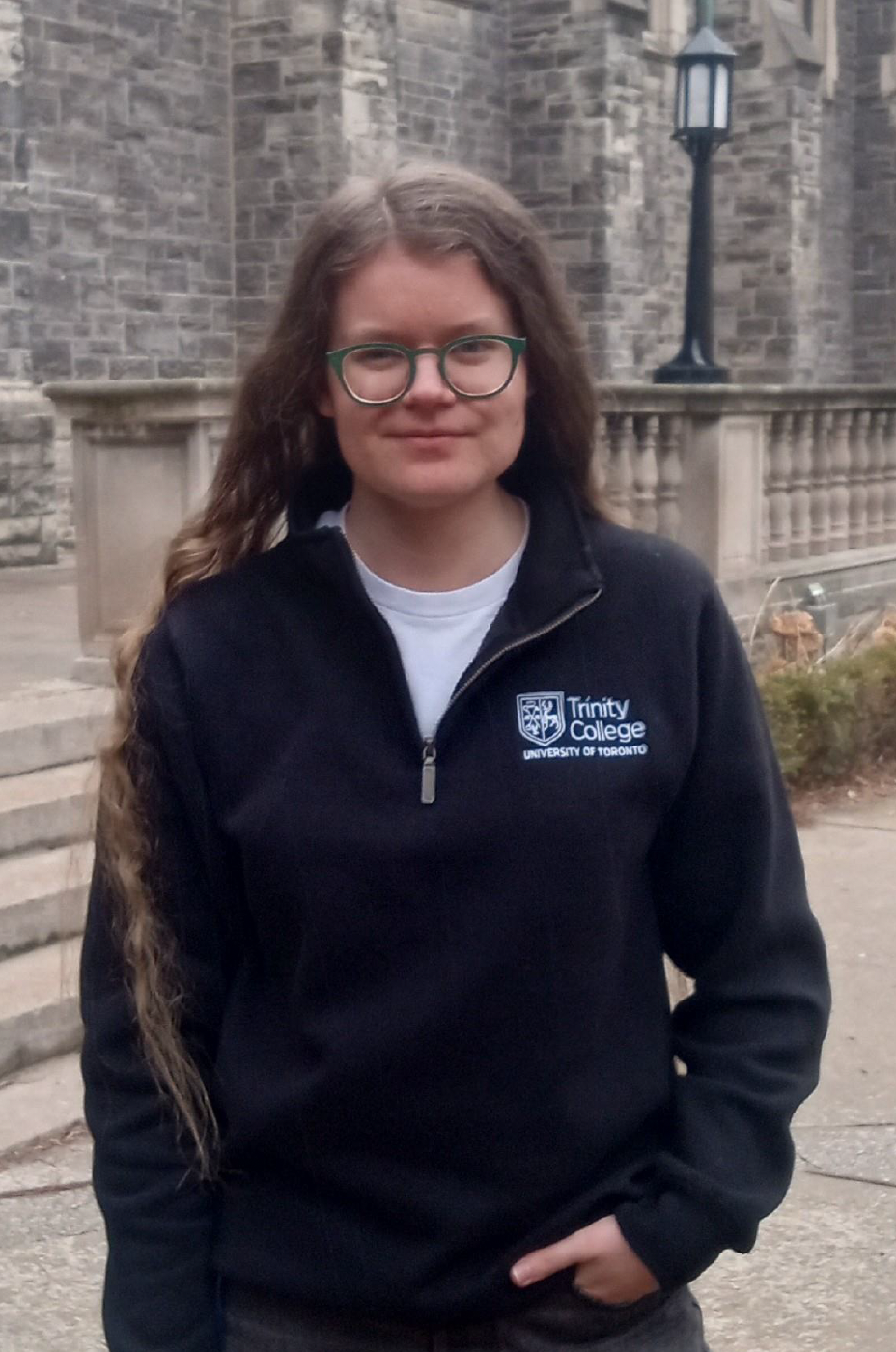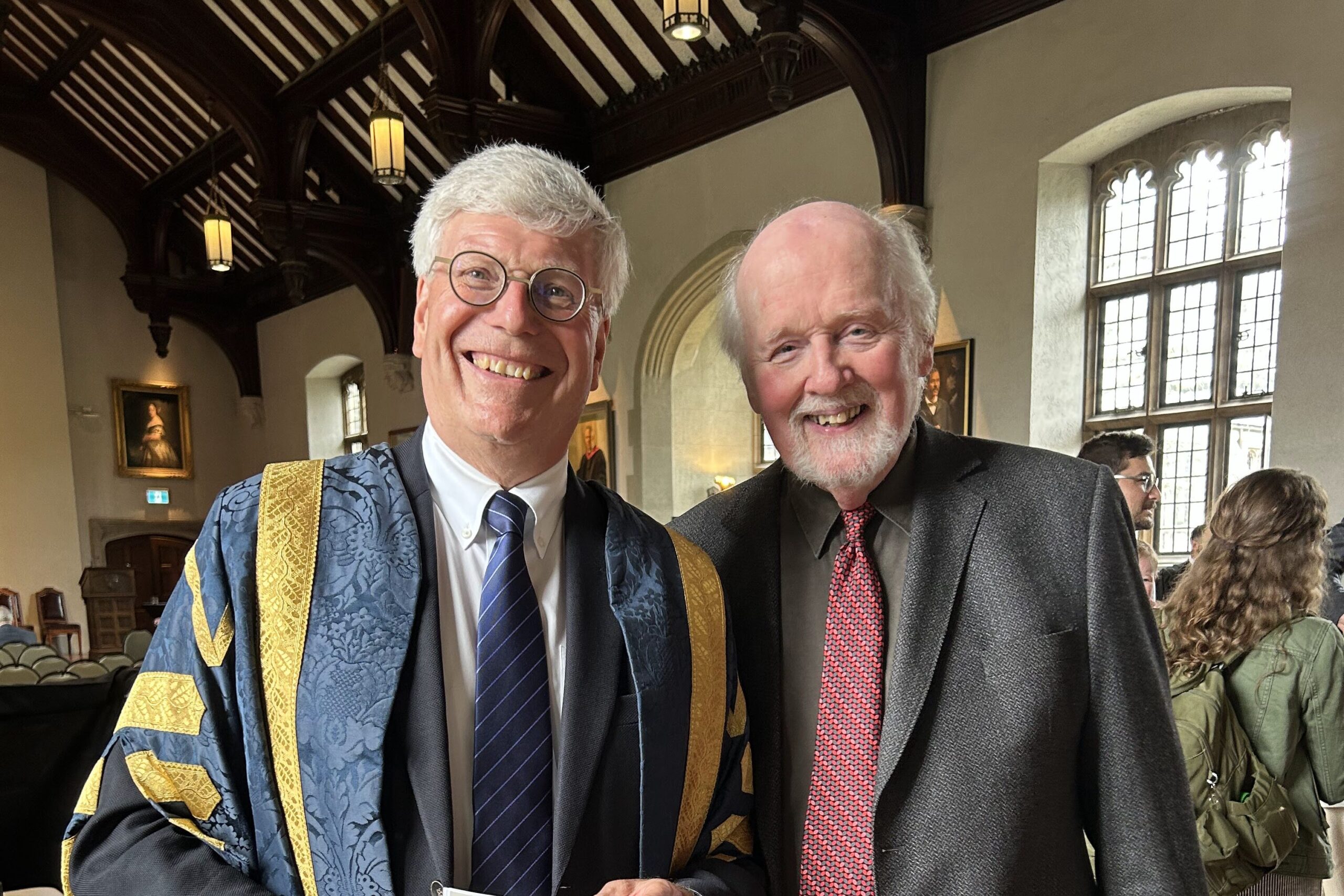
When John Franklin DD(Hon.) ’25 received an honorary doctorate earlier this year, we published his convocation address, but it was clear we were still eager to know more. The Salt Shaker caught up with John to ask a few questions about faith, social justice and imagination, IMAGO (the organization he leads) and how to engage more with the arts in parish life and at the College.

How would you describe the role of the imagination in the life of faith?
The role of imagination is often overlooked in the life of faith. Both within the culture and within the church. At times, we have been led to distrust the imagination. We can discern that mistrust when it is said – “It’s only your imagination.” I would contend that imagination has a central role in the journey of faith. Key to imagination is its capacity to see possibilities. It’s all too easy to get locked into what is and miss what can be. Faith, by its very nature, opens us to see beyond the immediate, and a vibrant faith means an engaged imagination. To be clear — what I would suggest is that imagination assists us in getting at the truth about things. It is of course a resource for fantasy and creating alternate ways of seeing the world. But even there we can find insights about our world and ourselves. To go a step further imagination is able to open a meeting place between us and the transcendent Other. As one author has put it “…imagination is that human capacity to receive and respond to God’s revelation in our everyday lives.”
When one thinks of where imagination is active it becomes readily evident that it will have a shaping role for the life of faith. The symbolism of the Eucharist calls upon imagination to engage the story it tells and to reach back in memory as well as look forward in hope. The parables and poetry of Scripture as well as the images, metaphors and stories all serve as resources for the faith journey. These resources may be instruction though they can also be transformative for the lives of those who engage them. It is the imagination that takes up the stories, images, metaphors and poems and puts them to work in our lives. And that work may be to guide our practices or perhaps to shape our character. The arts, whether found in Scripture or in the theatre, concert hall or gallery, can become a location for an encounter with God. Unfortunately there is much in our world which serves to shrivel the imagination and inhibit its work in being a resource for spiritual formation. I would say that imagination requires more attention in our faith communities so we can discover and discern more deeply how it can contribute to enriching life and not least the life of faith.
What led you to found IMAGO?
Well, to set the record straight, I am not the founder of IMAGO. Wilber Sutherland was the founder and it was launched in 1972. I knew Wilber and was acquainted with the work of IMAGO but did not take up my role in this boutique organization until 1998. The vision behind IMAGO was to foster a thoughtful engagement with culture and to be supportive of artists of faith who were at times marginalized by the church because of their art, and marginalized by the culture because of their faith. Much has changed in the ensuing years, but the artists’ need for advocacy has remained. An arts project adopted by IMAGO provides that project with the advantage of charitable status. This advantage can make a significant difference for someone wanting to create a CD, launch a theatre company, or do a visual art project. IMAGO has become a place of support and belonging for a host of artists over the years. We continue to put on events and profile artists of faith with a mandate to live faithfully with a face to the culture.
In your convocation address you recalled an arts event in which a “not too well dressed and rather loud, even disruptive” woman entered the room and set some people on edge. It ended up that she was an actor who was part of the evening’s experience! Would you articulate how you see a connection between the arts and social justice?
There is a deep connection between art and social justice. Not least because of the activity of the imagination that assists us in seeing possibilities, alternate ways of being in the world, visions for change, strategies for transformation. A book I have found valuable in this matter is by the South African theologian John De Gruchy, Christianity, Art and Transformation: Theological Aesthetics in the Struggle for Justice. A religion severed from imagination will likely have a diminished sense of justice. De Gruchy’s insightful work tells some of the story of the vital role of the arts in the effort to dismantle Apartheid. Music, poetry, visual art, the novel and drama may all serve as gestures of resistance against coercive and dehumanizing practices of a culture. This may be done not just through direct critique but through positive affirmation of a people and their culture that implicitly challenges oppressive practices.
In conversations about justice and art the theme of beauty commonly shows up. Beauty is in part about harmony and order, injustice is characterized by broken harmonies and evident disorders. Advocating for and creatively expressing beauty is one indirect means to resist the dehumanizing practices of injustice. Elaine Scarry’s little book On Beauty and Justice is an example of this connection.
Art at its best is able to get us to attend to what we may otherwise ignore or simply miss. It can draw our attention to the truth about our social, cultural and personal condition and in so doing can invite us to change.
If we are to speak meaningfully from our faith perspective we must address the particularities of our times. In another book that takes up matters of art and justice, Imagination in an Age of Crisis: Soundings from the Arts and Theology, Jason Goroncy & Rod Pattenden editors, Ben Quash in the Forward, notes, “Making art is intrinsically a political act insofar as it resists the tendency of what Auden calls ‘Management’ to define human beings only by their service of more or less anonymous systems of production.” Artist at their best communicate how things are with the world and provide hints as to how they might be different. Good art is never preachy but it may well awaken us to what we have failed to see and nudge us to practical response. One could say that art often has a prophetic edge.
And one more thing I would say is that art can be a resource to generate a spirit of hope in unsettling times. As noted above imagination can take us beyond immediate circumstance and enable us to see beyond or perhaps through those circumstances, inspiring and hopeful possibilities which we may participate in bringing about.
How might theological colleges more deeply engage with the arts, whether as part of their curriculum, worship, or wider student life?
Theological institutions first need to have a theological or biblically informed understanding of why the aesthetic matters in human life. There is a need to be released from our inclination to conceptualizing and intellectualizing our theological endeavours. Theologian Edward Farley at the end of his theological career wrote a book titled Faith and Beauty. In that book he wondered and indeed lamented about how he could go through an entire career as a theologian and overlook an aspect of his life that was very present — the aesthetic — and never bring it into his theological work. If the arts are to get attention in our theological colleges we need to have a clear vision of their value. They are not just a pleasant add-on to the work of theological education but they are an essential component if we wish to have vitality in our theological work and in our faith communities…
Have a course on the curriculum that acknowledges the vital role of the arts (visual art, music, architecture, poetry) in the history of the church and perhaps notes the varying viewpoints of what role the arts may or may not have. This could include guest lectures or interviews with practicing artists in courses already in place.
Find the artists in the student body and inquire of them what they would like to see happen in the community. Invite artists to come and talk or be interviewed at a student activity. Do a discussion on what role the arts may or should have in the life of a church community or in the process of their theological education.
Lectio divina is well known – perhaps a chapel service where there is Visio divina with either a work of western art or perhaps an icon from the Eastern tradition.
Imagine an ordinary church (finances and energy levels may be low). How might that church engage with the arts as part of its parish life, in a way that’s meaningful and achievable?
To this good and important question I will offer a few suggestions of what may be done, recognizing every community is different. They are in no particular order.
- Have an arts Sunday perhaps quarterly where the arts become a focus. Here you might include the presence of a visual artist with a work on display during the service or at a modest reception and discussion with the artist after the service. Invite a poet to read a poem — perhaps one created in response to the biblical text for the homily that week. If you have drama folk request a 90 second drama piece in response to a parable or biblical story — such a piece will likely generate good questions, bring the story into a contemporary setting and communicate to the community in a different genre — not to, say, be an encouragement to those who create the piece.
- Invite the possibility of an arts collective, not just for artists but for arts interested folk to meet, dialogue and discover together, and in ways suitable to the community.
- Do an arts “festival” where you invite artists in your community and perhaps some outside the church community to read their poetry, show their visual art or perform their music. It may be held in the good weather and perhaps in the church parking lot or some green space.
- Following the church calendar, select a passage of scripture that will be read one Sunday — say an Advent passage — and invite creatives in your community to create an artistic response to that passage. Find a way that those responses can be shared with the wider community.
- Host a monthly film night where films from past or present can be viewed and discussed. Films are where many get their values shaped. (Book: Josh Larsen, Movies are Prayers).
- Plan a book study specifically on arts and faith where you can get an accessible work (there are a lot of them) and host a six week conversation on the book.
What book, painting, or performance has recently been an inspiration to your own faith life?
Books
- Jeremy Begbie, Abundantly More: The Theological Promise of the Arts in a Reductionist World, Baker Academic, 2023
- Jennifer L. Holberg, Nurturing Narratives: The Power of Story to Shape our Faith, IVP, 2023
- Judith Wolfe, The Theological Imagination: Perception and Interpretation in Life, Art, and Faith, Cambridge Press, 2024
- Brian J. Walsh, Rags of Light: Leonard Cohen and the Landscape of the Biblical Imagination, Cascade Books, 2024.
Play
Forgiveness by Hiro Kanagawa. Stratford production 2025
Painting
I recently revisited Pieter Bruegel’s Landscape with the Fall of Icarus c. 1560; reminding me of how we can miss the important by our occupation with the familiar.

oil on wood (63 by 90 centimetres (25 in × 35 in)), Circle of P. Bruegel the Elder, Museum van Buuren, Brussels, Belgium
Public Domain

Jeremy Begbie